

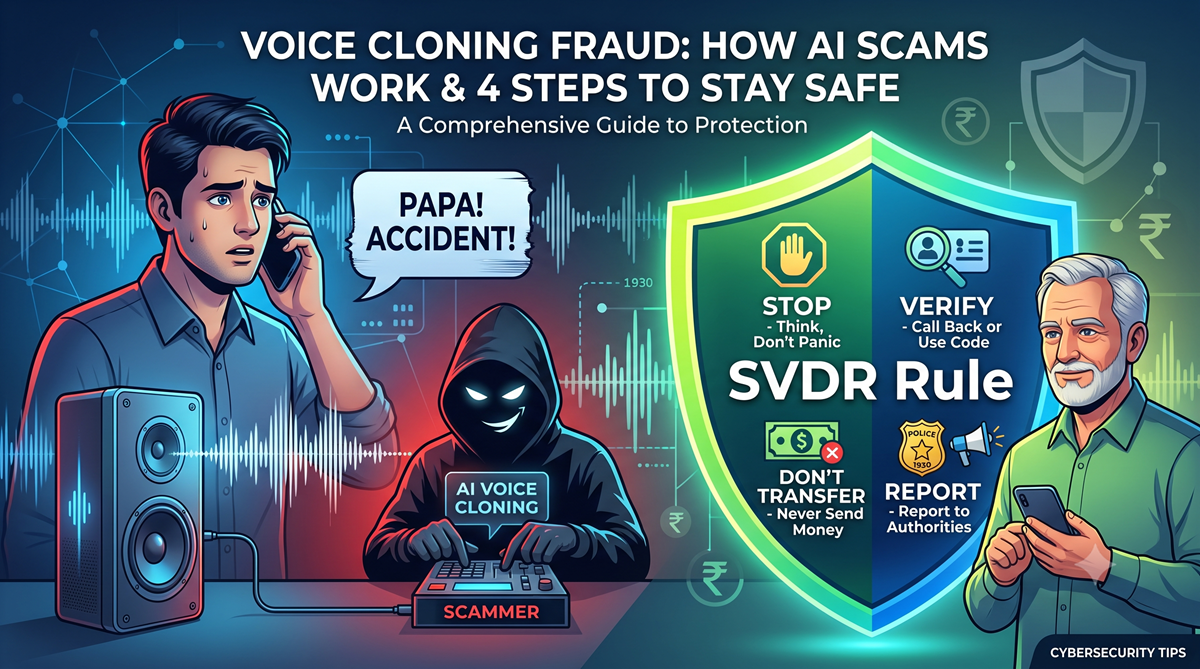
Voice Cloning Fraud: How AI Scams Work and 6 Simple Steps to Protect Your Family
Artificial Intelligence has transformed daily life by helping us write, edit photos, and automate work. However, cybercriminals are now misusing this same technology to orchestrate voice cloning fraud—a sophisticated scam where artificial intelligence generates realistic audio duplicates of real people. By mimicking the voices of children, spouses, or close friends during staged emergencies, scammers bypass our natural skepticism and exploit our deepest emotions to steal money or sensitive personal data.
When you answer the phone and hear a loved one crying for help, logic often takes a back seat to panic. Understanding how this technology works and implementing practical family defense measures can stop these fraudsters in their tracks.
What Is AI Voice Cloning and How Does It Work?
AI voice cloning uses deep learning algorithms to analyze recorded human speech and generate an identical-sounding synthetic voice.
Modern AI engines only require a clean audio sample of three to ten seconds to capture:
- Vocal Tone and Pitch: Whether the voice is high, deep, or gravelly.
- Cadence and Rhythm: The speed and natural pauses in ordinary speech.
- Accents and Inflections: Regional speech traits and pronunciation quirks.
- Emotional Expressions: Sighs, laughter, or the sound of crying.
Where Scammers Get Your Voice
Scammers rarely need private wiretaps or specialized equipment. They harvest audio directly from publicly accessible online sources, such as:
- Instagram Reels, YouTube Shorts, and TikTok clips
- Public Facebook videos or recorded family events
- Podcasts, interviews, and webinars
- Voicemail greeting recordings
Once trained on this audio, an attacker can type any script into a text-to-speech engine or speak directly through a voice-morphing filter during a live phone call.
Anatomy of a Scam Call: The Emotional Trap
Voice cloning scams succeed because they target human psychology rather than device security. A typical scam call follows a carefully calculated script:
[Phone Rings – Unknown or Spoofed Caller ID]
Caller: “Papa, please help me! I’ve been in a terrible accident…” (Sounds distressed or crying)
Scammer (taking phone): “Sir, your son hit a pedestrian. We have him in custody. Transfer ₹50,000 for hospital clearance immediately, or he goes to jail.”
High-Pressure Tactics Scammers Use
- Manufactured Urgency: They demand transfers within 5 to 10 minutes to prevent you from thinking clearly.
- Forced Isolation: They insist you keep the line open and order you not to contact spouses, relatives, or police.
- Authority Impersonation: Scammers frequently pose as doctors, lawyers, or police officers to add false legitimacy.
- Targeted Background Details: By scouring public social profiles, scammers reference real schools, workplaces, or friend names, making the story convincingly authentic.
6 Practical Steps to Protect Yourself from Voice Cloning Fraud
Follow this expanded security blueprint to protect your household and financial accounts:
-
Establish a Secret Family Safe Word
Agree on a confidential codeword or phrase with immediate family members.
- Make it unpredictable: Avoid pet names, birthdates, anniversaries, or street names.
- Keep it private: Never write it down online or share it via social media messaging.
- How to use it: If anyone calls claiming an emergency, ask: “What is our safe word?” An AI cloner or criminal caller will not know it. Never give hints.
-
Disconnect and Call Back on a Known Number
Never rely on inbound caller ID, as numbers can be easily spoofed using VoIP software.
- Hang up immediately if a caller demands money for an emergency.
- Dial your family member directly using the contact number already saved in your phone.
- If their line is busy or unanswered, call their school, workplace, or a friend who is likely with them.
-
Ask Unsearchable Personal Questions
If you cannot disconnect immediately, test the caller with questions whose answers do not exist anywhere online.
- Avoid public facts: Do not ask about colleges, job titles, or pet names that appear on social profiles.
- Ask private shared memories: “What dinner did we cook together last Sunday?” or “What did your uncle give you for your tenth birthday?”
-
Impose a Mandatory 5-Minute Cooling-Off Period
High-pressure demands to send money immediately are the clearest hallmark of a scam.
- Genuine hospitals and emergency services treat critical patients first; they do not condition emergency medical aid on immediate peer-to-peer digital transfers.
- Take a breath, step away from the phone, and consult another family member or trusted friend before initiating any bank transfer or UPI transaction.
-
Lock Down Your Social Media Audio Footprint
Reduce the amount of training data available to malicious actors.
- Switch personal social media profiles from public to private.
- Limit public video and audio posts that feature clear, uninterrupted speech of you or your children.
- Replace custom voicemail greetings that state your full name with standard carrier automated messages.
-
Act Instantly If Defrauded
If you have transferred funds or shared banking credentials under false pretenses, speed is critical:
- In India: Call the National Cyber Crime Helpline at 1930 immediately and register a complaint at cybercrime.gov.in.
- Contact Your Bank: Alert your bank or UPI payment provider right away to request a freeze or reversal on the fraudulent transaction reference number (UTR).
- Preserve Evidence: Save call logs, transaction receipts, payment IDs, and message screenshots for law enforcement.
Quick Reference: The “S-V-D-R” Rule
Teach this straightforward framework to elderly parents and young family members:
| Step | Action |
| STOP | Pause and breathe. Do not let fear dictate your actions. |
| VERIFY | Hang up and call back on a trusted number, or demand the family safe word. |
| DON’T TRANSFER | Refuse to send money under immediate phone pressure. |
| REPORT | Call your bank and file a complaint via official cybercrime helplines (e.g., 1930). |
Trust, but Verify
The phrase “hearing is believing” is no longer safe in the era of artificial intelligence. Hearing a familiar voice over a telephone call no longer provides definitive proof of identity.
Staying safe does not require complex technical skills—it simply requires a healthy pause. When high-stakes financial demands come through your phone speaker, disconnect the call, verify through secure channels, and protect your peace of mind.
Leave a Reply